

### Blog Post:
Ultralight backpacking gear has redefined what’s possible for long-distance hikers who want to move faster, farther, and more comfortably—without hauling an overloaded pack. In 2026, lighter and more technical gear than ever means you can tackle epic trails or ambitious backcountry routes with less fatigue and more enjoyment. This guide shows you what works, what to avoid, and how material breakthroughs shape your setup in real life.
Key Takeaways
- 2026’s best ultralight backpacking gear is defined by durability, comfort for heavy loads, and packing weights under 12.5 pounds.
- Material innovation like Challenge Ultra 200 fabric means real-world durability and weather resistance, but at premium prices.
- Smart packers focus on simple setups, invest in core gear, and avoid common pitfalls like underestimating comfort or over-optimizing for weight.
- What Is Ultralight Backpacking Gear and Why Does It Matter?
- How to Choose and Pack Ultralight Gear in 2026: A Practical Guide
- Advanced Insights: Material Advances & Pitfalls to Watch For
- Conclusion
- FAQ
What Is Ultralight Backpacking Gear and Why Does It Matter?
Ultralight backpacking means carrying less weight—period. Every item in your pack is scrutinized and optimized for weight, without giving up safety. In 2026, this means using advanced fabrics like Challenge Ultra 200 and compact designs that keep your total base weight (everything but food and water) around 12-13 pounds for a three-season trip. The goal is to reduce fatigue, hike bigger miles, and keep trail time fun—not a slog.

The best ultralight gear isn’t “bare minimum” or minimalist at all costs. Instead, it’s gear that fits your hiking style and the conditions you’ll actually face. For many, that means a well-built shelter, a comfortable and capable backpack, and accessories that make life easier or safer in the backcountry. When done responsibly, ultralight gear cuts weight, not comfort or confidence.
Learn how ultralight hiking fits into outdoor adventure sports for both fitness and enjoyment.
How to Choose and Pack Ultralight Gear in 2026: A Practical Guide
- Identify Your Trip’s Needs
Consider your hiking style, trail goals, and expected conditions. Are you thru-hiking, on a short overnight, or tackling remote terrain? List your must-haves and luxuries. - Set a Realistic Base Weight Target
Aim for a base weight between 8-13 pounds, depending on your experience and gear budget. Most three-season hikers land at about 12-13 pounds (gear list source). - Start With the “Big Three”
- Shelter: Pick from roomier but ultra-light options like the Hyperlite Mountain Gear Ultamid 2 (1 lb. 2 oz.), solo options like the Hyperlite Mid-1 (16.8 oz.), or thru-hike classics like the Zpacks Duplex.
- Pack: Try the Zpacks Arc Haul Ultra 60L (21.9 oz., external frame, Challenge Ultra 200) or Hyperlite Southwest 55L (30.3 oz., up to 40 lbs. capacity).
- Sleep system: Match your sleeping bag or quilt to overnight lows—choose down or synthetic fill, and match it with a compact sleeping pad.
- Dial in Clothing and Accessories
Build a simple layering system: lightweight base layers, a midweight insulated jacket, and a breathable rain shell. For sleeps, bring dedicated dry socks and clothes. - Cut the Clutter, Not Safety
Limit extras. But never skip essentials like a med kit, headlamp, water treatment, and navigation tools (satellite communicator if off-grid). - Pack Smart
Distribute heavy items near your back and center of gravity. Use stuff sacks for organization—ultralight fanny packs or pillow sacks add comfort with minimal weight.
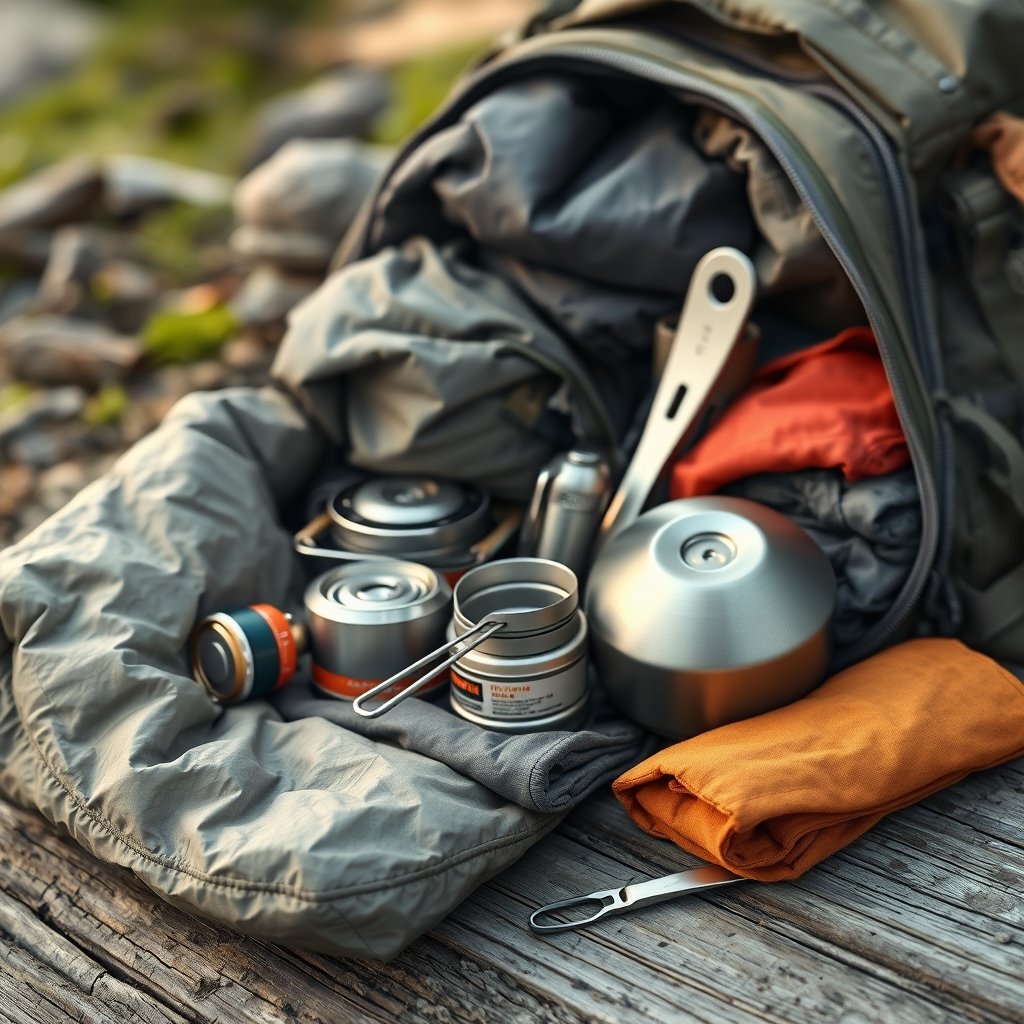
For more tips on gear selection and outdoor prep, see our bikepacking gear guide and this camp cookware checklist.
Advanced Insights: Material Advances & Pitfalls to Watch For
Materials like Dyneema revolutionized ultralight gear, but the real disruptor in 2026 is Challenge Ultra 200: it’s more abrasion-resistant and waterproof than earlier laminates. Packs like the Zpacks Arc Haul Ultra 60L show how ultralight doesn’t mean fragile.
However, ultralight doesn’t mean perfect. Let’s compare top models and common trade-offs:
| Model | Weight | Material | Price (USD) | Upsides | Potential Downsides |
|---|---|---|---|---|---|
| Hyperlite Ultamid 2 | 1 lb. 2 oz. | DCF (Dyneema Composite) | $730 | Roomy, strong in storms | Condensation, price, requires trekking poles |
| Zpacks Arc Haul Ultra 60L | 21.9 oz. | Challenge Ultra 200 | $399 | Custom straps, waterproof, external frame | Price, less structure if overloaded |
| Gossamer Gear Gorilla 50 | 17.6 oz. (w/o hip belt) | Robic Nylon | ~$255 (est.) | Light, sit-pad back, affordable | Not as weatherproof or durable |
| Hyperlite CrossPeak 2 | 18.4 oz. | DCF Laminate | $430 | Single-wall, wind-stable, freestanding | Condensation, learning curve for pitch |
- Downside: Price Shock — Premium materials cost real money. Cutting edge tents and packs may run $400-$700 for a single item.
- Downside: Comfort Compromises — Packs with minimal frames can suffer if you load over 30-35 lbs. Tents may lack space or weather protection versus heavier options.
- Durability Doubts — Even “bulletproof” fabrics can wear out at stress points or sharp abrasion, so pack repair tape and check stitching before trips.
- Accessory Shortcuts — Many guides skip small but crucial gear: ultralight fanny packs, stuff sack pillows, or gear organization hacks that truly improve comfort.
Stay sharp: read about other rapidly evolving gear like inflatable camping tents if you want set-and-go speed, or power station options if you carry sensitive electronics.
Conclusion
Cutting weight and maximizing comfort with ultralight backpacking gear takes honest planning, smart investments, and attention to real-world trade-offs. In 2026, new fabrics put true performance gear within reach—but only if you balance weight with durability and comfort. Ready to build your setup? Start light, pack smart, and hike farther with less.
Check out guides for building fitness at home or discover our detailed ultralight gear list for even more tips. It’s time to rethink every ounce in your pack for your next adventure.
FAQ
How much should my ultralight backpacking base weight be in 2026?
Most experienced hikers in 2026 report a three-season base weight around 12 to 13 pounds, with the minimum for serious ultralighters dipping under 10. The right number for you depends on comfort level, safety, and the specific trip.
Are ultralight tents durable enough for bad weather?
Modern tents made from Dyneema or Challenge Ultra 200 fabrics are extremely waterproof and surprisingly strong in wind. Still, they can struggle in snow or if pitched carelessly. Practice pitching, carry repair tape, and check reviews for your region’s typical weather.
What features actually matter the most in ultralight gear?
The three key features users prioritize are lightweight total base, comfort for carrying heavier water or food loads, and fabrics with a high durability-to-weight ratio.
Do I have to buy all new gear to go ultralight?
No. Start by swapping out one big item (like your pack or tent) and cutting down small extras you rarely use. Over time, you can rebuild your kit with lighter gear as your budget allows.
What accessories do ultralight backpackers usually add?
Small fanny packs, stuff sack pillows, and organizational tools (like zippered pouches) help keep things quick-accessible and comfortable, without adding more than a few extra ounces.